-
Vacancies and moves
-
News and events
-
Vision 2026
-
Vision Refresh
-
History, background and Vision Update 2021-24
-
Vision 2026 Key themes
-
Vision 2026 Parish Toolkit
-
Strategic Development Funded Projects
-
-
Investment Programme
-
What we do
-
Giving
-
Life Calling
-
Growing Leaders
-
Opportunities to Explore
-
Lay Majority Ministry
-
Whole life discipleship
-
Ordination
-
-
About us
-
Women in Ministry
-
Contact us
-
Meet the Diocesan Office teams
-
Our deaneries - Blackburn Archdeaconry
-
Our deaneries - Lancaster Archdeaconry
-
Our diocesan finances
-
Our wider church family
-
Our governance structures
-
-
Resources
-
Human Resources
-
Liturgy and church services
-
Creation Care and Net Zero Roadmap
-
For lay ministry
-
Senior clergy talks, articles and sermons
-
For clergy
-
Communications resources
-
Discipleship, prayer and worship
-
Parish Finance
-
Parish administration and governance
-
Community transformation
-
Being witnesses (parish mission resources)
-
Church buildings, land and legal matters
-
Parish Vision Fund
-
-
Safeguarding
Quicklinks
-
Vacancies and moves
-
Vacancies and moves
11th September 2026
Current school inspection system 'not sustainable' says Diocesan Director of Education, Iain Parks
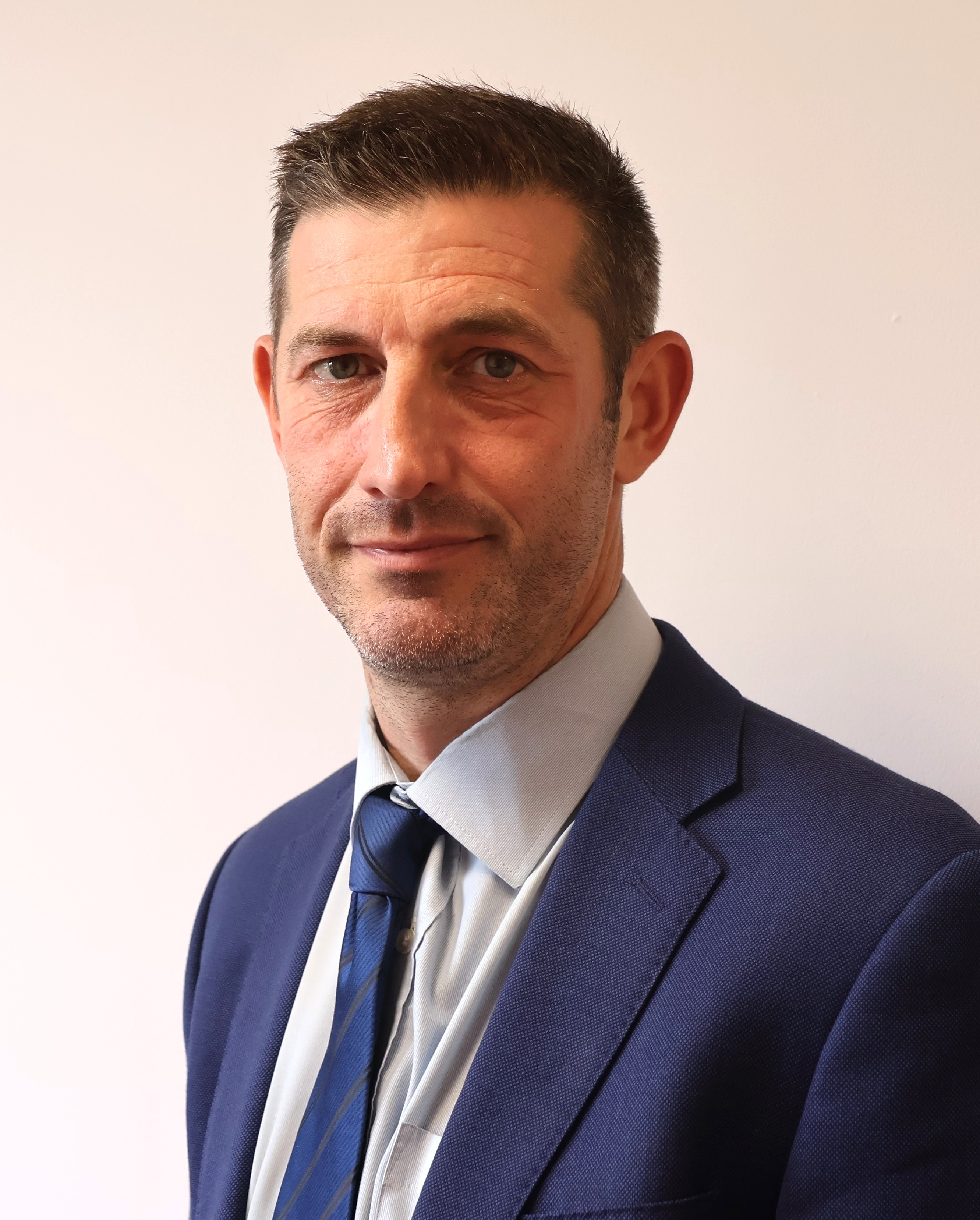 Church Times has spoken this week to our Diocesan Director of Education, Iain Parks, pictured, in the wake of an article he has written highlighting what he describes as a 'a quiet crisis unfolding in our schools'.
In the feature, Iain, features alongside his opposite number in Exeter Diocese, Sue Lockwood.
Speaking to the CT, Iain describes how, unless the 'quiet crisis' of system design is addressed by government, “we will continue to lose the very people upon whom our education system depends.”
- You can read the full article online here (non-subscribers can sign up for a limited number of free articles without paying a full subscription).
Below is Iain's original first person article, highlighting the issues he talks to the Church Times about in further detail.
The Diocese of Blackburn serves a diverse family of 191 Church of England schools, including 10 secondary schools, across Lancashire and surrounding areas. These include three multi-academy trusts, a significant number of stand‑alone academies, and a majority of schools that remain maintained, with around 10% having converted over time. Our schools span a wide range of contexts—from small, rural primaries to large urban secondaries, from communities facing significant deprivation to those that are more affluent, and everything in between. Together, they reflect the full breadth of the education landscape, united by a shared commitment to serving their communities and enabling every child to flourish.
There is a quiet crisis unfolding in our schools.
It is not a crisis of commitment - our headteachers and staff have never worked harder. It is not a crisis of ambition - schools continue to strive for excellence for every child in their care. It is a crisis of system design. And unless we are honest about it, we will continue to lose the very people upon whom our education system depends.
Across the Diocese of Blackburn, I see this reality every week. Leaders working late into the night. Teaching heads leading safeguarding, SEND, curriculum and community engagement all at once.
Senior leaders absorbing wave after wave of accountability, expectation and scrutiny. And increasingly, I am seeing something I have not seen to this extent before: exhaustion, anxiety, and, too often, tears.
This is not sustainable.
A framework that was meant to reduce pressure is doing the opposite
The latest inspection framework was introduced, in part, to support leader wellbeing. Yet in practice, leaders are experiencing something very different.
The shift to a “secure fit” model means schools must meet every element of every judgement in full, rather than being assessed in the round. At the same time, the threshold for success has been raised: the new “Expected” judgement is explicitly harder to achieve than the previous “Good”.
This matters.
Because when a system demands perfection across every domain, many of which have only recently been introduced, it leaves no room for professional judgement, context, or the realities schools face. A single weak moment, a pupil struggling to answer a question, or an area still embedding can shift an outcome. That is not accountability done well; it is accountability made brittle.
The smallest schools carry the greatest burden
If this framework places strain on large secondary schools with extensive leadership capacity, its impact on small primaries is profound.
In many of our schools, the headteacher is also the SENCo, DSL, curriculum lead, behaviour lead—and often teaching for much of the week. There is no layer beneath them to absorb pressure. There is no capacity to “hold the line” during inspection. And yet they are held to exactly the same expectations.
This is not equity. It is structural imbalance.
We are asking the smallest schools, with the least capacity, to meet the most complex and expansive set of expectations the system has ever produced.
Accountability without alignment
At the same time, the wider system is pulling in different directions.
Schools are told to be inclusive, yet the SEND system is under immense strain. Leaders describe ever-increasing numbers of children with complex needs, without the funding, expertise, or specialist places required to support them appropriately. Schools are stepping in, not because they are resourced to do so, but because there is nowhere else for these children to go.
We are asking schools to compensate for a system that is not working.
Similarly, expectations around parental experience have shifted. Parents are rightly ambitious for their children, but they are also hearing messages from policy, from media, from wider systems, that every child should receive a bespoke experience. Schools share that aspiration. But education does not take place in isolation; it takes place in community. And when expectation outpaces capacity, frustration grows.
This is not a failure of families. It is a failure of coherence.
A system that is losing its leaders
The consequences are already visible.
Retention data shows that after five years, only 70% of primary headteachers remain in post, with a loss of around 20% over that period. In secondary schools, retention is even more concerning, with some of the lowest figures recorded since records began.
But these figures only tell part of the story.
The government’s own Working Lives of Teachers and Leaders survey reveals something more troubling: 89% of teachers and leaders considering leaving cite high workload and stress, and 57% say their job is negatively affecting their mental health. More than half.
More than half of the professionals teaching and leading in our schools are experiencing a negative impact on their mental health as a result of the system they are working within.
This is not a marginal issue. It is systemic.
Behind the retention figures are real people, experienced, committed leaders, who are not walking away lightly, but because the conditions of the role have become unsustainable.
Structural solutions are not a silver bullet
Alongside this pressure sits a continued drive towards academisation and structural change.
There are excellent multi-academy trusts doing transformational work, just as there are strong local authorities. But it is also true that structure alone does not guarantee improvement. Some trusts are deeply collaborative, distributing leadership and building capacity. Others centralise power in ways that limit meaningful change at school level.
We must not pretend that one structural model is the answer to every challenge.
What matters is not the structure itself, but the quality of leadership, the strength of relationships, and the capacity for genuine improvement.
A system where responsibility is unclear and pressure is constant
One of the most troubling aspects of the current environment is that no one is entirely clear where responsibility lies.
Unions are asking who is accountable for leader wellbeing. Local authorities point to dioceses and trusts. Dioceses, operating with limited statutory powers, are expected to support without the resources to do so comprehensively. Government points to guidance and future reform.
And in the midst of this, the headteacher carries the weight.
Wellbeing sessions, supervision, and opportunities to step away from the day job are not unimportant. But they are not enough. When leaders are overwhelmed by the fundamental conditions of the system, wellbeing becomes, in their own words, “a running joke”.
Asking “Are you okay?” during an inspection does not mitigate the pressure of the system that created the anxiety in the first place.
This is not about removing accountability
Let us be clear: schools’ welcome accountability. We all want our children to receive the very best education, and scrutiny has an important role in that.
But accountability must be:
- fair
- proportionate
- intelligible
- and grounded in the realities schools face
At present, it is none of these consistently.
A moment of moral clarity
If we continue on the current path, we risk normalising a system that damages the very people it depends upon.
We have already seen the most tragic consequences when pressure becomes too great. We cannot allow such events to become the backdrop to policy debate.
Education does not operate like other inspected systems. When a hospital faces challenge, patients do not choose whether to attend. When a bank is under scrutiny, customers do not necessarily withdraw overnight. But when a school is judged harshly, parents quite understandably respond with their feet and schools can quickly become unviable.
The stakes are uniquely high.
What must change
If we are serious about retaining our leaders and sustaining our schools, we must address the root causes:
- Reform the inspection framework, including the secure-fit methodology, to allow professional judgement and context
- Align accountability with system capacity, particularly for small schools
- Fund and reform SEND properly, so schools are not left carrying unsustainable responsibility
- Be honest about system expectations, particularly around parental engagement and provision
- Shift from structural solutions to relational ones, focusing on what actually improves schools
This is not the responsibility of one part of the system. It belongs to all of us government, system leaders, unions, local authorities, dioceses.
We cannot keep asking for more with less
Our school leaders have shown extraordinary resilience. But resilience is not an infinite resource.
We cannot continue to ask people to do more, with less, under greater scrutiny and expect better outcomes.
The truth is uncomfortable, but it is necessary:
The system, as it currently stands, is not sustainable. And unless we change course, we will continue to lose the very leaders we need most.
IT IS TIME TO LISTEN AND TO ACT.
Iain Parks
Director of Education
Blackburn Board of Education