-
Vacancies and moves
-
News and events
-
Vision 2026
-
Vision Refresh
-
History, background and Vision Update 2021-24
-
Vision 2026 Key themes
-
Vision 2026 Parish Toolkit
-
Strategic Development Funded Projects
-
-
Investment Programme
-
What we do
-
Giving
-
Life Calling
-
Growing Leaders
-
Opportunities to Explore
-
Lay Majority Ministry
-
Whole life discipleship
-
Ordination
-
-
About us
-
Women in Ministry
-
Contact us
-
Meet the Diocesan Office teams
-
Our deaneries - Blackburn Archdeaconry
-
Our deaneries - Lancaster Archdeaconry
-
Our diocesan finances
-
Our wider church family
-
Our governance structures
-
-
Resources
-
Human Resources
-
Liturgy and church services
-
Creation Care and Net Zero Roadmap
-
For lay ministry
-
Senior clergy talks, articles and sermons
-
For clergy
-
Communications resources
-
Discipleship, prayer and worship
-
Parish Finance
-
Parish administration and governance
-
Community transformation
-
Being witnesses (parish mission resources)
-
Church buildings, land and legal matters
-
Parish Vision Fund
-
-
Safeguarding
Quicklinks
-
Vacancies and moves
-
Vacancies and moves
20th July 2026
Bishop Philip's Presidential Address to Diocesan Synod marking end of Vision 2026
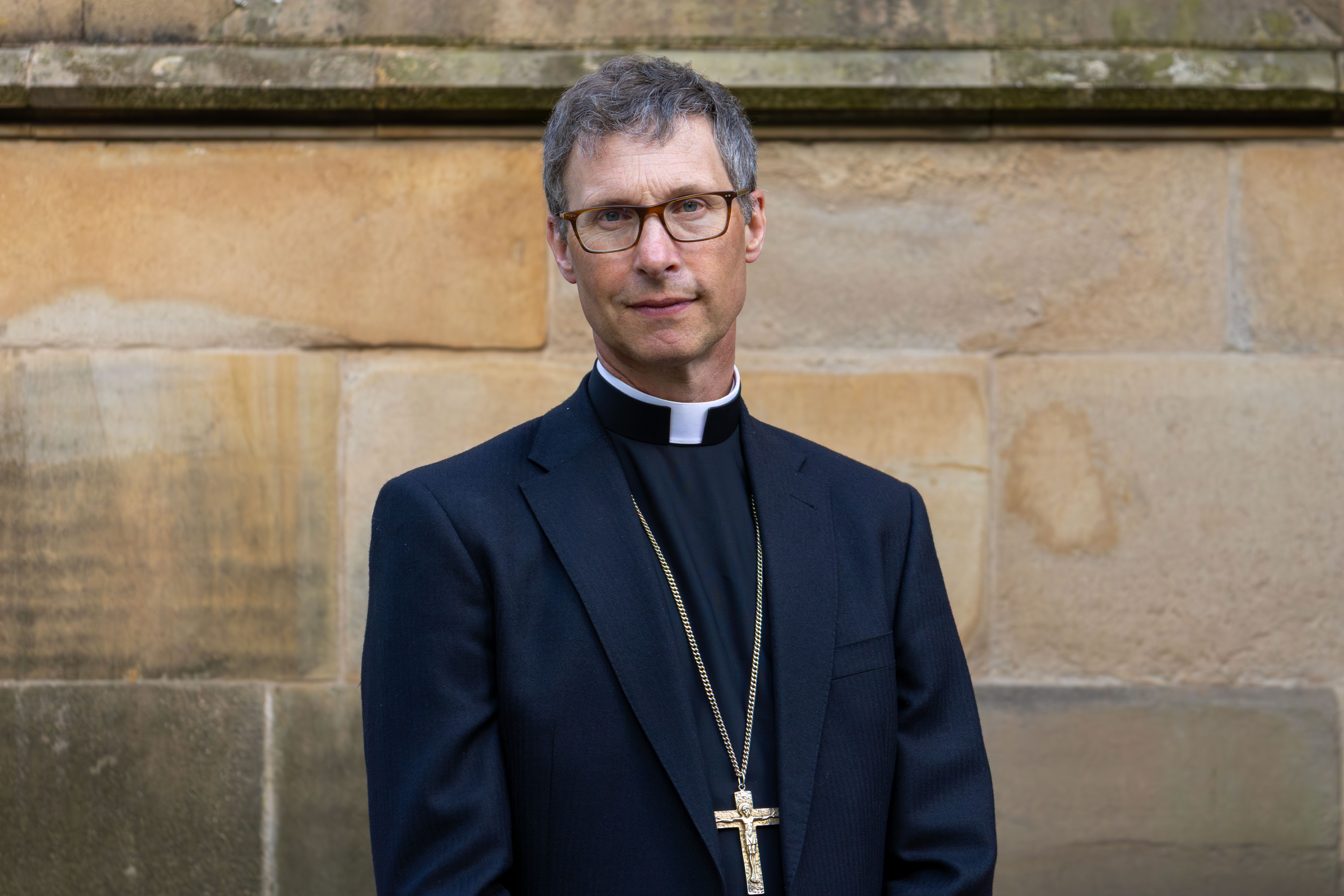 Watch Bishop Philip summarising this Address in a video on Facebook here.
Without a vision the people perish. Proverbs 29, 18.
That may be one of the most misapplied sentences in the whole of the scriptures. Let’s be clear, that Proverb has nothing to do with Diocesan vision statements.
Nobody would have perished if we had not had Vision 2026. We live through faith in Jesus Christ alone who died and rose again to set us free and who calls us to live to his Kingdom now.
The only vision that matters is the sight that enables us to see him and gaze upon his majesty for ever.
Diocesan vision statements are only of any use if they point to him.Which I hope that Vision 2026 has done. So, as today we bid it a fond farewell, here are my top 10 Vision 2026 highlights in no particular order.
One. A changed culture. The Diocese feels very different from 2015. Across traditions it is firmly focused on the priority of living the Christian life purposefully, declaring Jesus as Lord and expecting growth. And as our conference showed, there is an embedded atmosphere of joy, one which breaks down barriers of tradition and supports ministry in some of the toughest parishes in the country.
Two. Maintaining stipendiary clergy numbers. Many in the wider Church said we were crazy to make this commitment whilst running deficit budgets. But because of a culture of growth and because of heroic giving in our parishes we have been able to stick to that pledge. And whilst you could never say the DBF is awash with cash, we have not yet gone bankrupt!
Three. Two hundred new local congregations. The give it a go approach has had such an impact here. And whilst some are small and fragile and others have come and gone, it is a feature of our fastest growing churches that they have adopted a multi-congregation model
Four. The Diocesan Renewal Programme. Rather than re-organising an entire diocese in response to a deficit, we decided to offer relational, positive support to those parishes who most needed it. And we have seen remarkable levels of growth in Parishes who opt in to the DRP, so skilfully led by a dedicated team and making use of the Leading your Church into Growth approach.
Five. The Fruitful app and our Lent and Advent devotionals. The app is a cutting edge, innovative resource which gives easy and attractive access, free of charge, to excellent resources that support people to grow in prayer and in their love for the scriptures. And our excellent printed resources at Lent and Advent remain incredibly popular with over 10,000 of each distributed. These resources have got people thinking, praying and meeting with the Lord in his Word.
Six. External investment. The Diocesan Vision has made us, in the words of a member of the Church of England’s Strategic Development Unit, an easy diocese to invest in. That has led to the SDF1 project to develop urban leaders, SDF2 and 3 to fund resource churches in Preston, Blackburn and Blackpool, innovation funding for choir church and the transformative £25.5m Diocesan Investment Programme, which has enabled us to fund more than 70 parish-based lay posts.
Seven. New lay leadership pathways. The highly popular Authorised Lay Ministry scheme is a result of the Lay Majority Framework which is a response to Vision 2026. And the cutting edge M:Power leadership programme that forms urban leaders has smashed all targets and changed many lives.
Eight. Recruitment. Relative to others we are blessed with a low clergy vacancy rate and have also been able to attract excellent colleagues to the Diocesan Board of Finance and Diocesan Board of Education teams in recent years. A large part of the reason for this is the sense of purpose and direction given by Vision 2026.
Nine. Young people at the centre of our life. Our schools are the jewel in the crown of this Diocese and are now working even more hand in hand with our parishes and our Diocese. Our DBE team offer gold standard resources and support to our parishes and schools and the DIP programme is enabling the deployment of 30 Ignite Leaders. We have set up a Youth Forum so that the voice of young people can be better heard and we are seeing growing numbers of children and young people in our churches.
Ten. Prayer. A few weeks ago, the Bishop’s Budget Team were scratching our heads over future budget setting and were worrying about levels of reserves by 2030. Our Director of Finance, Ruth McGaughey, said, ‘What we mustn’t forget is that in this Diocese we set our budget on the basis of prayer.’ Where else would the Director of Finance, usually the prophet of doom and decline, say that? In Vision 2026 and in our new Vision, we have tried to root everything in heartfelt prayer, knowing that it is God’s church not ours.
Of course we have by no means achieved all we set out to when we launched Vision 2026. Though we have seen five consecutive years of growth, we are still numerically a smaller Diocese than we were in 2015.
Nobody back then could have anticipated the Covid crisis with long-term impacts that we are yet fully to understand. Though we are now seeing a recovery in vocations, our ordinand numbers vary wildly from year to year which makes clergy deployment a very hard thing to plan for.
Developments in the wider church, such as the LLF process and shocking safeguarding revelations have had local impact. Our vision for Whalley Abbey remains a work in progress. Our Cathedral has had some very bumpy years and I am grateful to the Interim Dean for the stability he is bringing. We should not boast, and anyway as Paul reminds us, if we want to do any boasting then all we should boast about is the Lord Jesus.
But we would be wrong not to give thanks for all that has happened under God in the 11 years of Vision 2026. And I especially want to record my thanks to Bishop Julian, now happily retired, whose energy and driving passion to share the Good News of the Gospel was the inspiration behind this Vision.
Many said that a vision statement that covered 11 years was crazy. He knew that change takes time, especially if you want to bring people with you. And the nationally led consultation process that followed his retirement showed him right because they remarked that they had never seen a Diocese with such a widely embedded and understood strategic vision.
So thank you to every one of you who, known or unknown, has contributed to Vision 2026. Thank you also to our senior team who have led it with such coherence and tenacity. The most exciting thing of all is that this Vision has brought people to faith in Jesus Christ who would not otherwise have come to know him. That must always remain our vision. For without him, the people perish.
Rt Rev. Philip North, Bishop of Blackburn